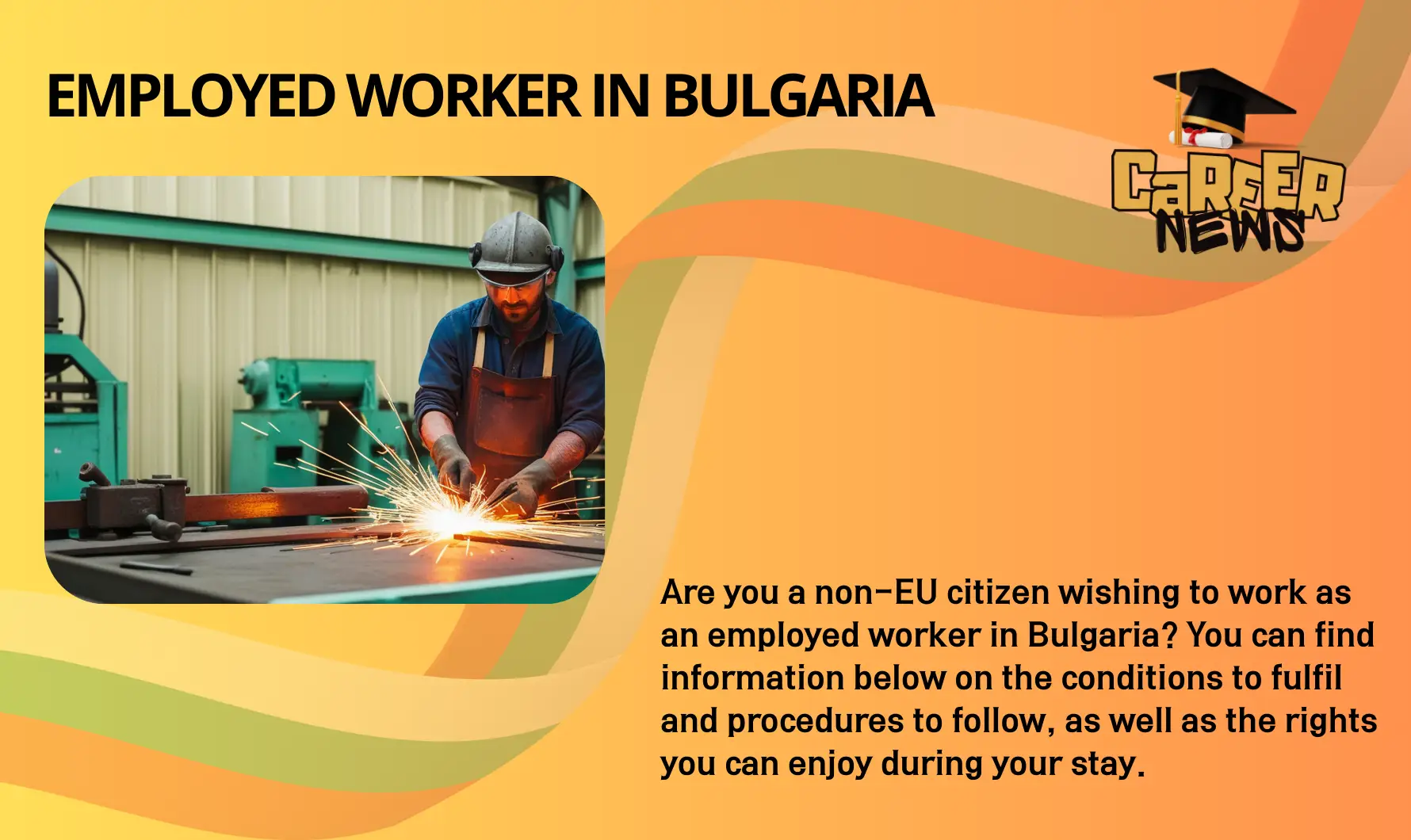
Are you a non-EU citizen wishing to work as an employed worker in Bulgaria? You can find information below on the conditions to fulfil and procedures to follow, as well as the rights you can enjoy during your stay.
| Topic | Key Details |
|---|
| Conditions | Non-EU citizens need a single/work permit, a Type D visa, and a residence permit. Foreign workers cannot exceed 20% of the employer’s average number of Bulgarian/EEA/Swiss employees over the past 12 months. |
| Procedures (Where & How to Apply) | The employer applies for approval through the Employment Agency. A labour-market test is required unless exempt (e.g., guest professors, athletes, performers). After approval, the worker applies for a Type D visa at a Bulgarian embassy. After arrival, the Single Permit is issued by the Migration Directorate. |
| Required Documents | Passport, criminal record certificate, proof of financial means, accommodation proof, health insurance, and documents proving qualifications or experience suited to the job. |
| Duration / Validity | Permit is valid for 1 year and can be renewed up to 3 years. Renewal must be applied for at least 14 days before expiry. After 3 years, the worker must return to their home country for one month before applying again. |
| Other Requirements | After arriving in Bulgaria, the worker must register their address within 5 days. |
| Appeals | Decisions can be appealed in local administrative courts within 14 days. |
| Rights – Change of Employment | The permit is employer-specific. To change employers, a new permit is required. |
| Rights – Change of Status | Possible under Bulgarian foreigner law. |
| Long-term Residence | Possible after 5 years of legal residence in Bulgaria. |
Ready to take the next step?
Click the link to Apply!